ClariFi
Financial intelligence and decision support for Kenyan MSMEs.
- Tax Intelligence
- eTIMS
- Agribusiness
- Reverse Invoicing
Answer first
The short answer
Omwami’s immediate solution is not indiscriminate reverse invoicing. It is to preserve transaction evidence, validate and segment suppliers, use the correct invoicing route for each supplier, build an auditable delivery-to-payment trail, and pursue integrated Reverse Invoicing only where eligibility and prior KRA approval support it.
Omwami is identified by first name only. Identifying commercial and supplier details have been withheld.
The dilemma
Real produce. Real payment. Missing electronic invoice.
Omwami is an agribusiness aggregator. He purchases or coordinates produce from small-scale suppliers. His commercial challenge is obtaining adequate electronic invoice documentation for genuine produce transactions.
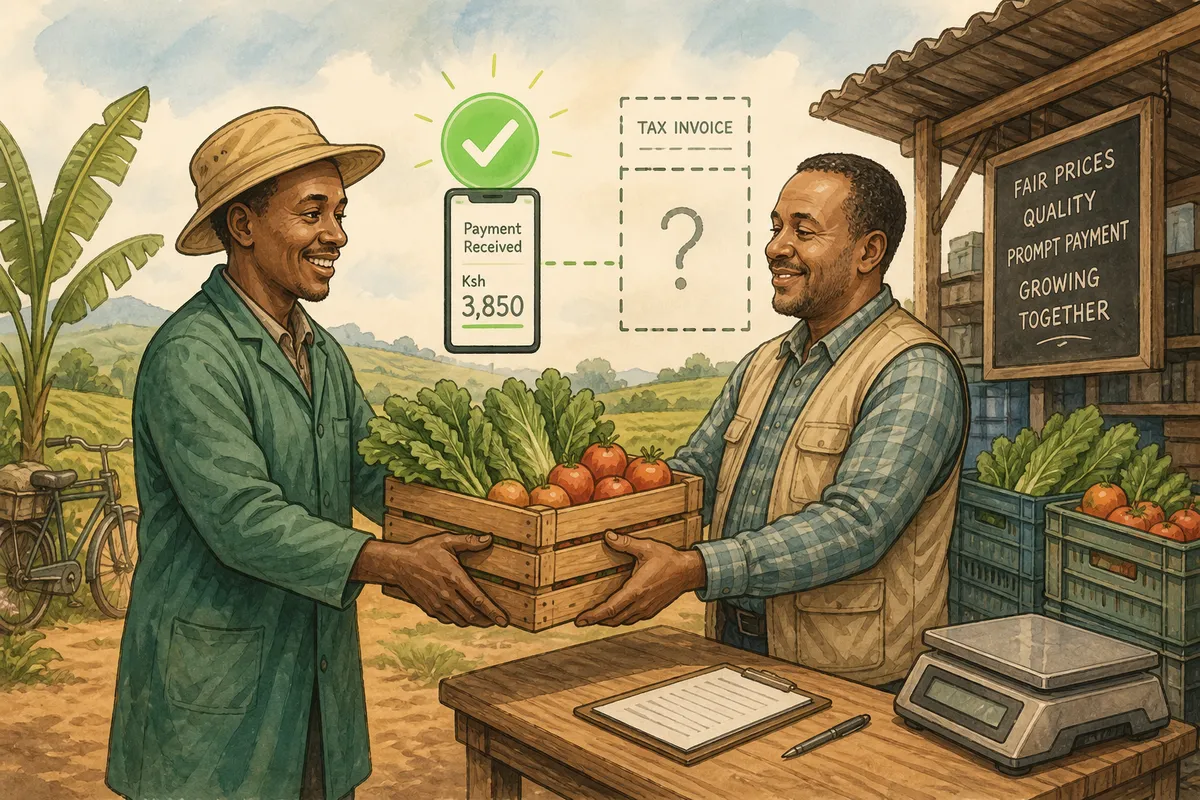
All of the following may exist:
- Genuine produce
- A real farmer
- A delivery record
- A weighing or grading record
- A traceable payment
- An onward sale
Yet the purchase can still face documentation risk if the required electronic tax invoice is absent. The problem is not that smallholder farmers are dishonest. The problem is that farm-gate reality and electronic-invoice formality do not always meet in the same document.
Industry context
The invisible work of an aggregator
Agribusiness aggregators commonly connect fragmented smallholder supply to processors, exporters, retailers and institutional buyers. The pressures below are typical industry pressures, not confirmed facts about Omwami’s particular operation.
- Small, dispersed deliveries
- Weighing and grading
- Quality rejection
- Perishability
- Transport and storage
- Working-capital requirements
- Immediate farmer payments
- Delayed buyer settlements
- Price volatility
- Traceability demands
- Thin margins
Those pressures explain why documentation gaps are structural, not moral failure. They also explain why the wrong “fix” (excluding smallholders who cannot invoice) would damage inclusive markets. Fresh-produce cash-flow pressures appear in related ClariFi reading.
Where risk appears
When a real purchase becomes a tax risk
- Expense-substantiation exposure where electronic invoices are expected for deductible expenditure
- Mismatches between accounting records and eTIMS data during income-and-expense validation
- Audit and reconciliation burdens when delivery and payment exist but invoice identity does not
- Cash-flow consequences if costs are challenged while sales remain taxed
- Thin margins that can be overwhelmed if purchase costs are disallowed
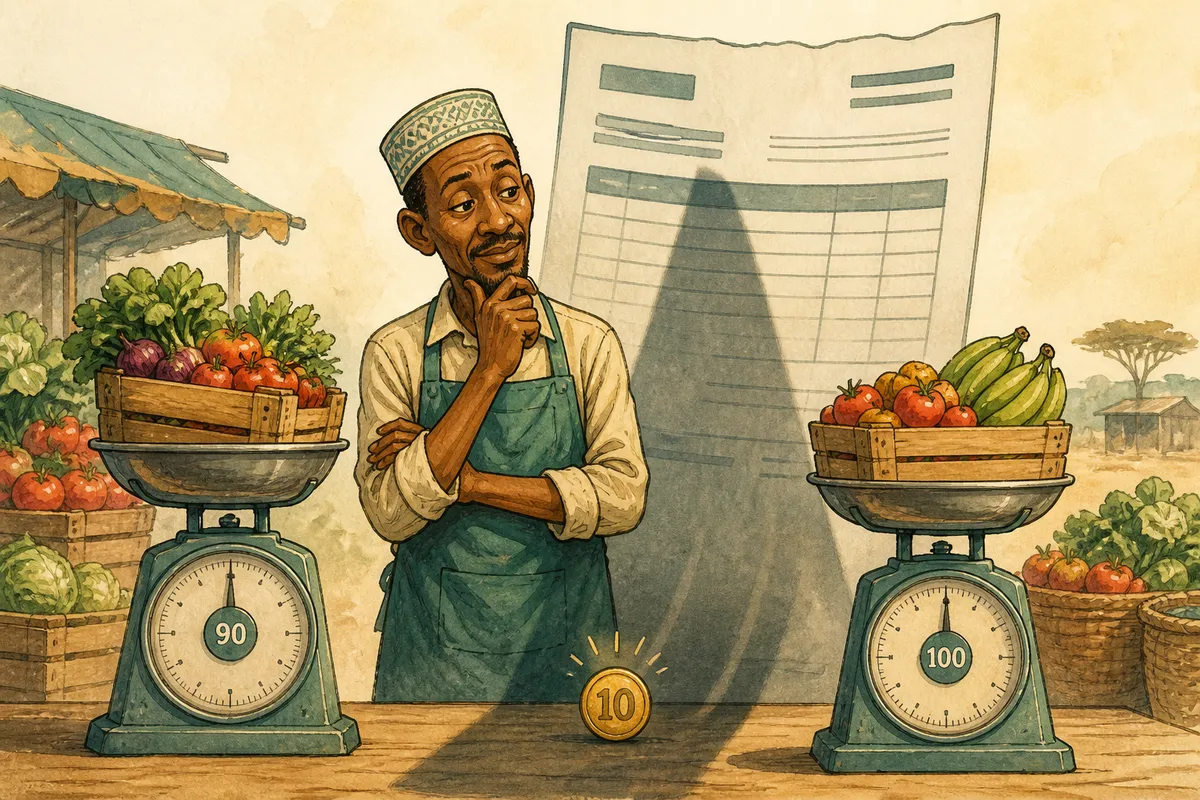
Illustrative margin example
- Produce purchased
- KES 90
- Produce sold
- KES 100
- Economic gross margin
- KES 10
If the KES 90 cost were disallowed, the tax computation could cease to reflect the business’s real economics.
Illustrative only. These are not Omwami’s figures and do not represent a tax assessment.
Related reading: invoice evidence versus immunity and money identity in eTIMS reconciliation.
The legal bridge
Why purchaser-issued invoices exist
Kenya’s electronic invoicing framework requires businesses to issue electronic tax invoices through eTIMS, subject to statutory exemptions. Separately, the Tax Procedures Act provides a bridge for supplies from small businesses and small-scale farmers: where annual turnover does not exceed five million shillings, the purchaser shall issue a tax invoice for the purpose of ascertaining tax liability.
KRA operationalises related pathways through Buyer-Initiated Invoicing (often via eCitizen / USSD workflows) and, for structured higher-volume ecosystems, integrated Reverse Invoicing through a buyer’s Trader Invoicing System connected to eTIMS via OSCU or VSCU.
Those pathways are not interchangeable. Eligibility, seller response rules, VAT-registration restrictions, prior KRA approval and system-integration requirements differ. Always confirm the current primary text and KRA guidance for the facts of the particular value chain.
Decision table
Three invoicing routes, choose deliberately
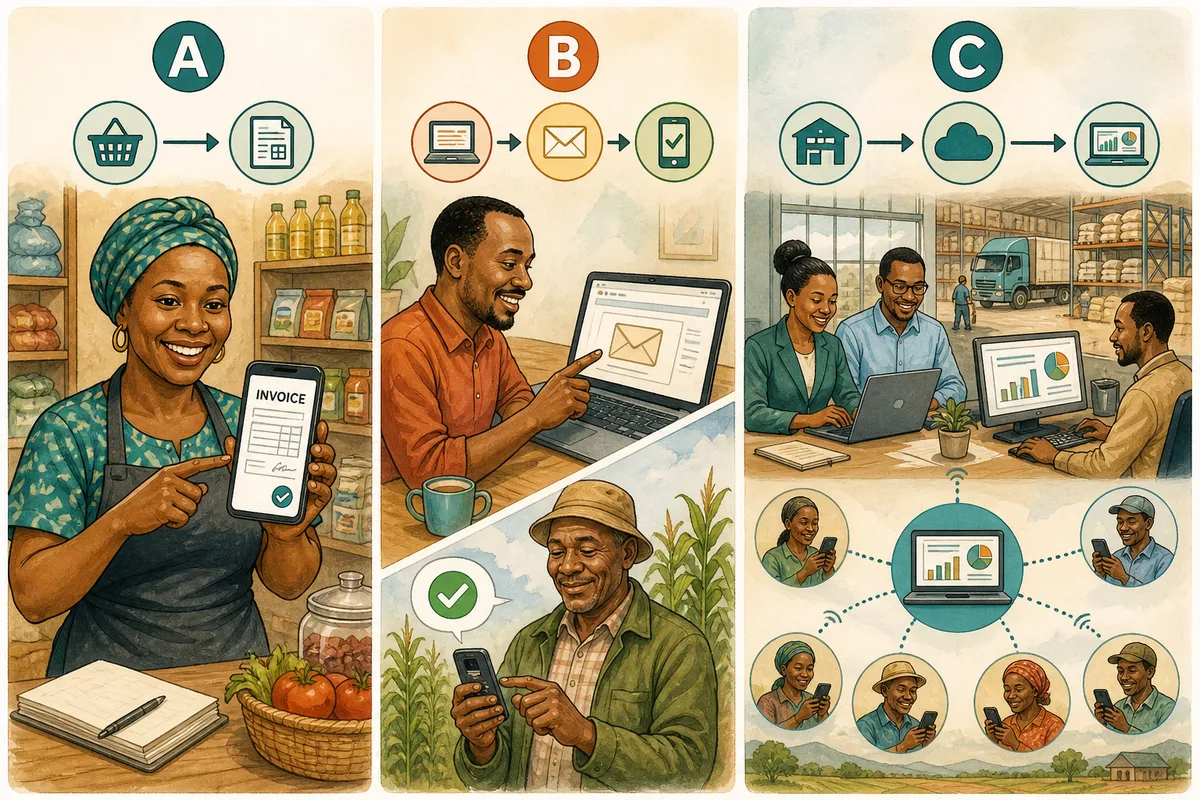
| Question | Seller-issued invoice | Buyer-Initiated Invoicing | Integrated Reverse Invoicing |
|---|---|---|---|
| Best fit | Supplier can invoice normally | Eligible smaller or lower-volume suppliers | Structured, high-volume supply chains |
| Who generates the invoice? | Seller | Buyer through the prescribed KRA process | Buyer’s approved invoicing system |
| Supplier interaction | Normal invoicing | Seller approval or rejection within the prescribed period | Contract consent and invoice-event notifications |
| VAT-registered supplier | Seller issues their own valid invoice | KRA guidance blocks BII invoices for VAT-registered sellers | Confirm current treatment in writing before design |
| Technology | Supplier eTIMS solution | eCitizen / eTIMS / USSD or supported upload | OSCU / VSCU system-to-system integration |
| Approval | Normal onboarding | Buyer and seller declarations / process terms | Prior KRA KYC / approval for the buyer |
| Main control | Valid supplier invoice | Accurate buyer initiation and seller response | End-to-end governance and audit trail |
Best fit
- Seller-issued
- Supplier can invoice normally
- Buyer-Initiated
- Eligible smaller or lower-volume suppliers
- Reverse Invoicing
- Structured, high-volume supply chains
Who generates the invoice?
- Seller-issued
- Seller
- Buyer-Initiated
- Buyer through the prescribed KRA process
- Reverse Invoicing
- Buyer’s approved invoicing system
Supplier interaction
- Seller-issued
- Normal invoicing
- Buyer-Initiated
- Seller approval or rejection within the prescribed period
- Reverse Invoicing
- Contract consent and invoice-event notifications
VAT-registered supplier
- Seller-issued
- Seller issues their own valid invoice
- Buyer-Initiated
- KRA guidance blocks BII invoices for VAT-registered sellers
- Reverse Invoicing
- Confirm current treatment in writing before design
Technology
- Seller-issued
- Supplier eTIMS solution
- Buyer-Initiated
- eCitizen / eTIMS / USSD or supported upload
- Reverse Invoicing
- OSCU / VSCU system-to-system integration
Approval
- Seller-issued
- Normal onboarding
- Buyer-Initiated
- Buyer and seller declarations / process terms
- Reverse Invoicing
- Prior KRA KYC / approval for the buyer
Main control
- Seller-issued
- Valid supplier invoice
- Buyer-Initiated
- Accurate buyer initiation and seller response
- Reverse Invoicing
- End-to-end governance and audit trail
ClariFi decision path
- 1.If the seller must issue their own invoice, use the seller-issued route.
- 2.If the seller qualifies for Buyer-Initiated Invoicing, use that process.
- 3.If Omwami operates a structured, high-volume supplier ecosystem, assess integrated Reverse Invoicing readiness and seek KRA approval.
- 4.If eligibility is unclear, obtain written professional or KRA guidance before implementation.
Days 1–30 foundation
Omwami’s immediate stabilisation plan
This evidence does not automatically replace an electronic invoice. It is essential for reconstruction, professional review, dispute management and future compliance design.
- Supplier identity and KRA PIN
- VAT and eTIMS status
- Supplier contracts
- Delivery notes
- Collection-centre records
- Weight, grade and quality evidence
- Agreed prices
- Farmer consent
- M-PESA or bank-payment references
- Transport and warehouse records
- Inventory movements
- Onward-sale documentation
- Existing invoices and credit notes
Scalable solution
Farmer → Delivery → Validation → Invoice → Payment → Inventory → Final Buyer
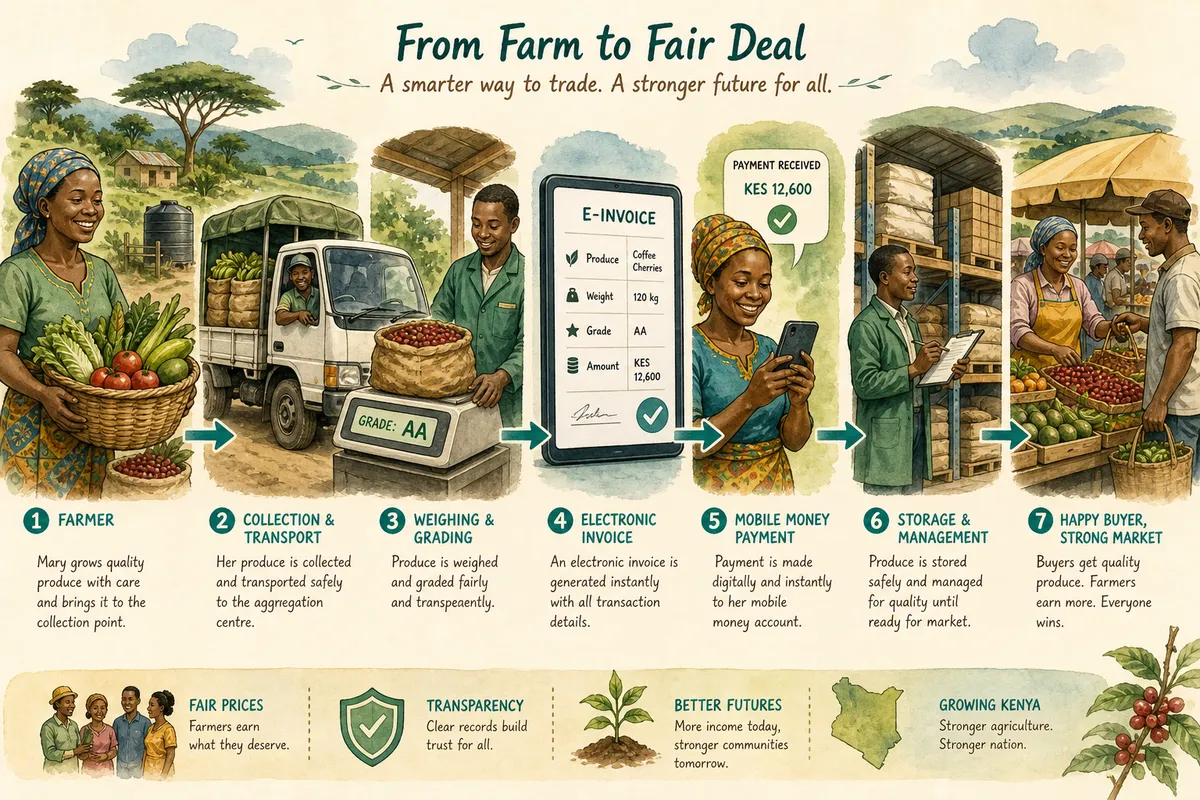
- 1.Farmer onboarding
- 2.Identity and tax-status validation
- 3.Informed consent
- 4.Produce-delivery capture
- 5.Farmer-visible weighing and grading
- 6.Approved-price validation
- 7.Invoice generation through the correct route
- 8.Farmer approval or notification where applicable
- 9.Traceable settlement
- 10.Credit-note and dispute management
- 11.Inventory and onward-sale reconciliation
- 12.Audit and compliance reporting
Governance
Controls that protect Omwami and the farmer
- Maker-checker approval
- Segregation of delivery, invoice and payment responsibilities
- Locked price and grading masters
- Calibrated weighing equipment
- Duplicate-invoice detection
- Direct farmer payments
- Verified payout-account changes
- Transparent disclosure of deductions
- Separate treatment of service fees and commissions
- Immutable audit logs
- Monthly farmer statements
- Data minimisation and purpose limitation
- Secure processor agreements
- Breach and complaint procedures
- Minimum record-retention requirements (KRA Reverse Invoicing guidance: at least five years for buyer system records)
Operating model
Principal versus agent
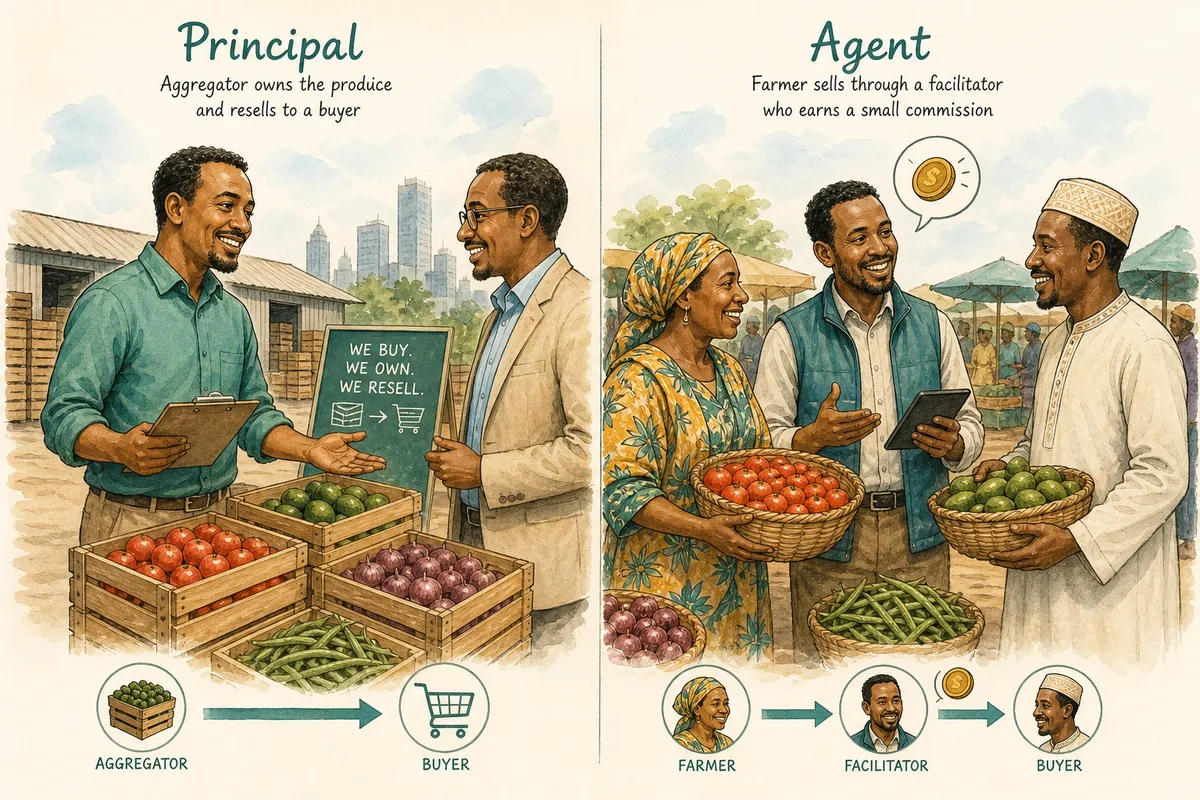
Principal / reseller
An aggregator that purchases, owns and resells produce is typically a principal. Purchase invoices, inventory, cost of sales and onward-sale invoices should reflect ownership and resale.
Agent / facilitator
An agent or platform that facilitates a farmer’s sale and earns a commission should usually show the farmer’s sale, the commission invoice, and cash movements that match that model, not a false principal purchase trail.
Contracts, revenue recognition, eTIMS invoices, VAT treatment and commission invoices must reflect the actual operating model. Do not force a Reverse Invoicing design onto the wrong commercial identity. Related reading: platform and money-identity case studies on ClariFi. Platform GMV identity.
Scope discipline
What Reverse Invoicing solves, and what it does not
It can help with
- Electronic evidence of genuine purchases
- Supplier-documentation consistency
- Faster procurement-to-payment reconciliation
- Real-time or batch reporting
- Reduced farmer administrative burden
- Stronger audit trails
- Better transaction visibility
- Potentially more useful transaction histories for financing, subject to lawful data use
It does not automatically solve
- Historical undocumented transactions
- VAT classification of produce
- Withholding obligations
- County cess or sector levies
- Price volatility
- Perishability
- Working-capital shortages
- Delayed buyer payments
- Poor physical traceability
- Farmer income-tax obligations
- KRA approval requirements
Implementation
Omwami’s 30/60/90-day roadmap
Days 1–30: Stabilise
- Complete an invoice-gap diagnostic
- Preserve transaction evidence
- Build or clean the supplier master
- Validate supplier PIN, VAT and eTIMS status
- Segment suppliers by invoicing route
- Reconcile deliveries, payments, inventory and sales
- Obtain professional review of historic exposure
Days 31–60: Design
- Update supplier contracts
- Develop informed-consent wording
- Define the delivery-to-payment control process
- Create a commodity and tax-classification matrix
- Pilot Buyer-Initiated Invoicing with eligible suppliers
- Prepare the KRA KYC and readiness pack for integrated Reverse Invoicing where appropriate
- Complete data-protection and system-control assessments
Days 61–90: Pilot and validate
- Complete sandbox or technical testing where approved
- Pilot with a limited supplier group
- Track invoice acceptance, transmission, payment matching and disputes
- Reconcile eTIMS, accounts payable, inventory and onward sales
- Correct errors through approved credit-note procedures
- Expand only after control, legal and KRA approval gates are satisfied
Inclusive formalisation
Broader policy recommendations
Reverse invoicing and Buyer-Initiated Invoicing should be treated as inclusive market infrastructure, not merely tax-enforcement machinery. Agricultural value-chain tax identity matters beyond a single aggregator.
KRA
Keep eligibility rules, response periods and approval pathways clear for agricultural value chains; support practical onboarding for small-scale farmers.
Agricultural aggregators
Segment suppliers, invest in evidence rails, and seek the correct route rather than excluding non-invoicing farmers by default.
Cooperatives and farmer organisations
Help members understand consent, PIN validation and how buyer-generated invoices affect their records.
Processors and exporters
Align procurement contracts and payment cycles with electronic-invoice reality so aggregators are not trapped mid-chain.
County governments
Coordinate cess and local levy administration with national electronic-invoice evidence without creating contradictory paper trails.
Financial institutions
Where lawful, recognise verified transaction histories as decision inputs, not as a substitute for tax compliance itself.
Technology providers
Build consent, audit logs, credit notes and data-protection controls into settlement systems, not invoice generation alone.
FAQs
Frequently asked questions
What is KRA eTIMS Reverse Invoicing?
According to KRA, Reverse Invoicing lets an approved large-scale buyer generate eTIMS invoices on behalf of small-scale sellers through the buyer’s Trader Invoicing System, integrated with eTIMS via OSCU or VSCU. It is aimed at structured supply ecosystems and requires prior KRA KYC/approval.
What is the difference between Buyer-Initiated Invoicing and Reverse Invoicing?
Buyer-Initiated Invoicing is a prescribed buyer-generated invoice workflow, accessed via eCitizen / related channels, where the seller is notified and must approve or reject within the stated period (KRA guidance currently states thirty days). Reverse Invoicing is a system-to-system model for approved buyers with integrated billing systems. They are related ideas, not interchangeable products.
Can an aggregator issue an invoice for every smallholder farmer?
No. Seller-issued invoices remain required where suppliers can and must invoice themselves. BII is limited by eligibility rules (including KRA’s block on VAT-registered sellers in the BII workflow). Reverse Invoicing requires contracts, consent, system readiness and KRA approval. Segment suppliers; do not assume universal coverage.
Does a reverse invoice automatically charge VAT to the farmer?
No. Reverse Invoicing is an invoicing and reporting mechanism. It does not automatically change the VAT classification of produce, create an input-VAT credit, or settle the farmer’s income-tax position. Confirm VAT treatment for the commodity and parties separately.
Can reverse invoicing correct old undocumented purchases?
No. Historic undocumented purchases need transaction-specific professional review and, where appropriate, engagement with KRA. Do not fabricate, backdate or invent unsupported invoices.
What must an aggregator prepare before applying?
Typical readiness includes supplier master data and PIN/VAT/eTIMS validation, contracts and informed consent, delivery-to-payment controls, credit-note procedures, data-protection and audit-trail design, and, for Reverse Invoicing, a trusted Trader Invoicing System plus the KRA KYC pack.
Can ClariFi guarantee KRA approval?
No. ClariFi provides decision-support information and tools to help MSMEs prepare. It does not guarantee tax deductibility, KRA approval or assessment outcomes, and is not presented as a KRA-certified Reverse Invoicing integrator in this article.
ClariFi decision support
Match each supplier to the correct invoicing route. Connect delivery, invoice, payment, inventory and onward sale.
Turn the invoice gap into a verified transaction trail
ClariFi helps MSMEs examine compliance risks, evaluate available options and prepare the evidence, controls and decisions required before implementation. ClariFi is not a tax agent, does not guarantee KRA approval, and is not presented here as a KRA-certified Reverse Invoicing integrator. KAN Consultants can review readiness, historic exposure and documentation design.
KAN Consultants can review agribusiness invoice-gap exposure, BII pilots and Reverse Invoicing readiness packs.
Do not exclude the farmer. Reconstruct the transaction, and choose the invoicing route the law and the facts support.
Official sources
- KRA, Buyer Initiated Invoicing, accessed 2026-08-23
- KRA, Reverse Invoicing, accessed 2026-08-23
- KRA, What is eTIMS, accessed 2026-08-23
- KRA, eTIMS System-to-System Integration, accessed 2026-08-23
- KRA, Validation of Income and Expenses in the Income Tax Returns (public notice), accessed 2026-08-23
- Tax Procedures Act (Kenya Law), accessed 2026-08-23
- Income Tax Act (Kenya Law), accessed 2026-08-23
- Value Added Tax Act (Kenya Law), accessed 2026-08-23
- Data Protection Act (Kenya Law), accessed 2026-08-23