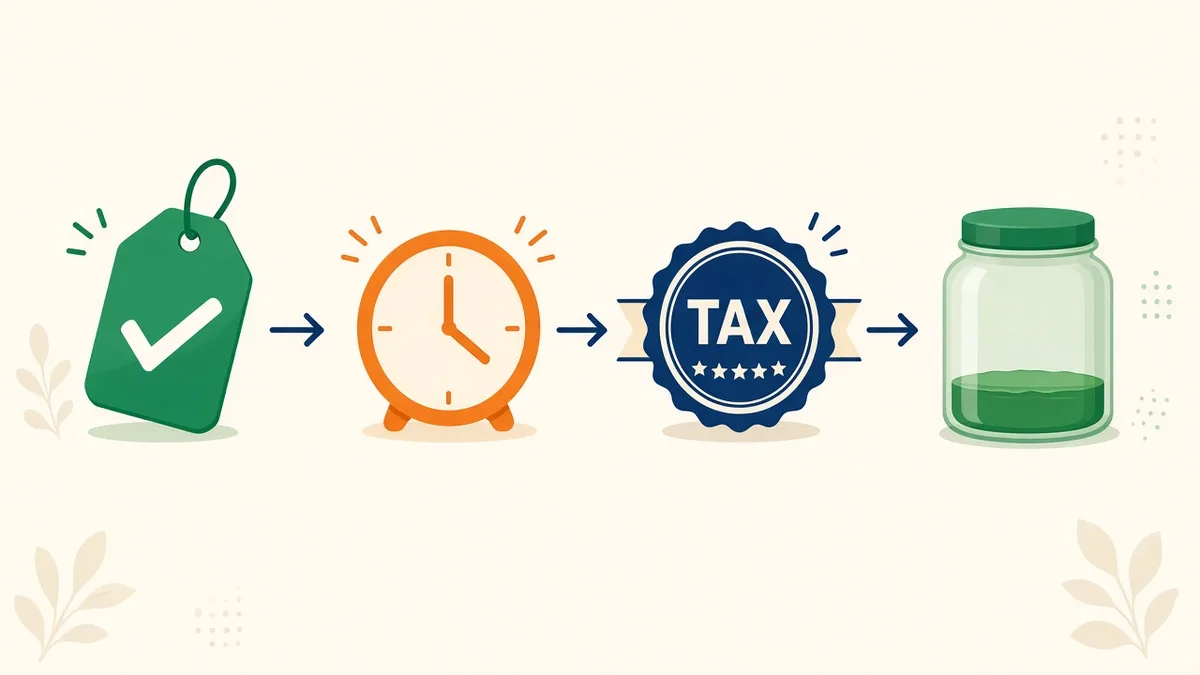
ClariFi
Financial intelligence and decision support for Kenyan MSMEs.
- Conceptual illustration
- Cash Flow
- Financial Statements
- Tax Timing
- Kenya MSME
Answer first
A business can announce a profit on Friday and struggle to pay its workers on Monday.
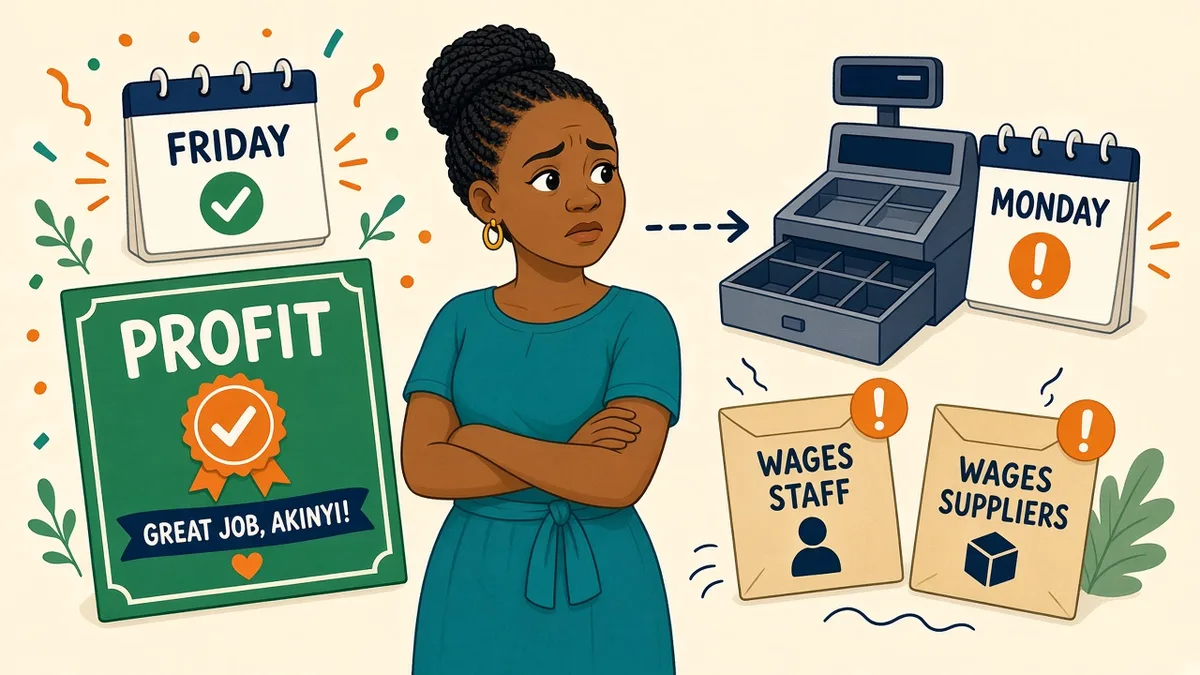
The sales were real.
The profit was correctly calculated.
The customer had simply not paid.
And a tax payment may fall due before the customer settles.
When the immediate question is business continuity, the Cash Flow Statement deserves priority. That is a management argument, not an accounting-standard hierarchy. All four statements remain necessary for understanding sustainable performance.
Teaching case
Akinyi Distribution: Profitable on Paper, Short of Cash.
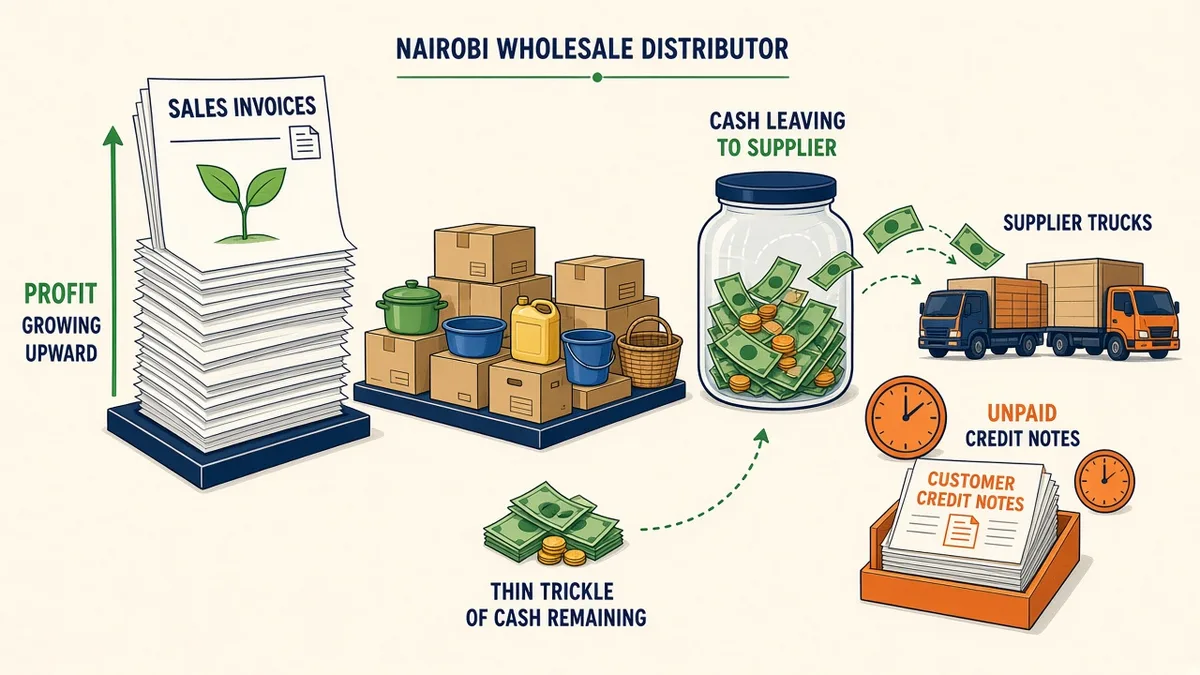
Akinyi operates a Nairobi distribution business supplying household goods to neighbourhood retailers. Larger orders have increased revenue, but customers receive credit while suppliers require prompt payment.
“If the business made KES 200,000, why do I need more money to keep it running?”
All figures are in KES. For the first snapshot, VAT, taxation, financing costs and non-cash expenses are excluded.
- Opening cash of KES 500,000 was entirely funded by owner capital.
- There are no other opening assets or liabilities.
- No opening receivables or payables exist.
- All inventory purchased during the month is sold.
- All recognized costs are paid during the month.
- There are no owner withdrawals, distributions, additional capital contributions or other transactions.
Profit versus cash
The contradiction between reported profit and cash shortage
| Monthly activity | KES |
|---|---|
| Opening cash | 500,000 |
| Sales recognized | 1,000,000 |
| Cost of goods sold, purchased and paid during the month | 650,000 |
| Operating expenses, paid during the month | 150,000 |
| Profit before tax | 200,000 |
| Customer collections | 400,000 |
| Closing customer receivables | 600,000 |
| Operating cash flow before tax | (400,000) |
| Closing cash before tax payments | 100,000 |
KES 200,000 profit − KES 600,000 increase in receivables = KES 400,000 operating cash outflow.
The business consumed 80% of its opening cash despite reporting a profit.
Revenue was recognized when goods were sold. Cash arrived only when customers paid. Cost of goods and operating expenses left the bank during the month. The Income Statement answered whether sales exceeded recognized costs. The Cash Flow Statement answered whether the bank balance could carry the next week.
Four statements, four questions
What each financial statement reveals
| Statement | Principal question |
|---|---|
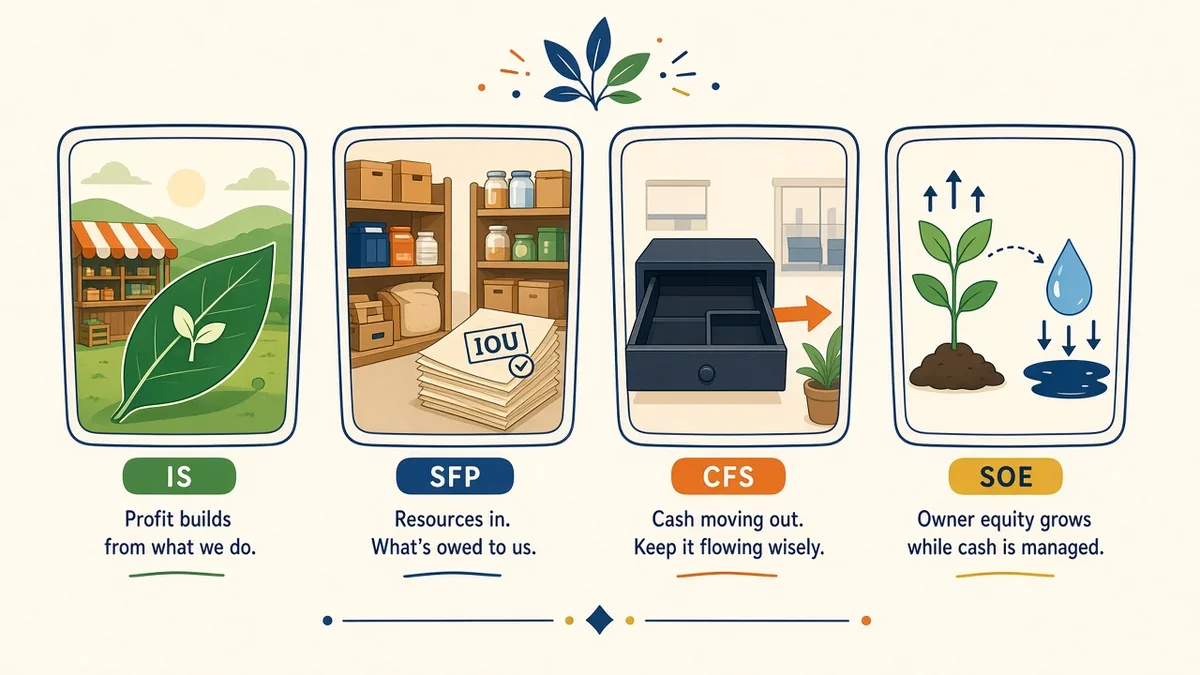
| Income Statement (IS) | Did the business earn a profit during the period? |
| Statement of Financial Position (SFP) | What does the business own and owe at a particular date? |
| Cash Flow Statement (CFS) | Where did cash come from, where did it go, and how did the balance change? |
| Statement of Changes in Equity (SOE) | How did owners’ interests change through earnings, contributions, distributions and other movements? |
Present the following explicitly as a simplified snapshot before introducing taxation:
| Statement | What Akinyi sees | Interpretation |
|---|---|---|
| IS | KES 200,000 profit before tax | Sales exceeded recognized costs. |
| SFP | KES 100,000 cash and KES 600,000 receivables; no liabilities in this simplified snapshot | Most resources are tied up in customer balances. |
| CFS | KES 400,000 operating cash outflow | Trading consumed cash during the period. |
| SOE | KES 500,000 opening capital plus KES 200,000 pre-tax earnings | Before tax adjustments, equity increased to KES 700,000 while cash declined. |
These are teaching summaries, not a complete set of statutory financial statements. Complete financial reporting also includes notes and, where applicable, other comprehensive income.
Keep these distinctions clear when reading any set of accounts:
- Accounting profit versus taxable income.
- Profit versus operating cash flow.
- Tax expense versus tax paid.
- Tax liabilities versus cash reserved for payment.
- Revenue versus customer receipts.
- Retained earnings versus available cash.
- Historical financial statements versus cash forecasts.
Working capital
Why growth can consume cash
Akinyi’s larger orders looked like progress. They also meant more stock bought before more cash arrived.
Customers received credit. Suppliers required prompt payment. That timing gap is working capital — the money the business must advance to keep trading.
Growth that outruns collections does not merely delay profit. It can empty the cash that pays wages, restocks shelves and meets tax calendars.
Cash planning
The tax and funding decision
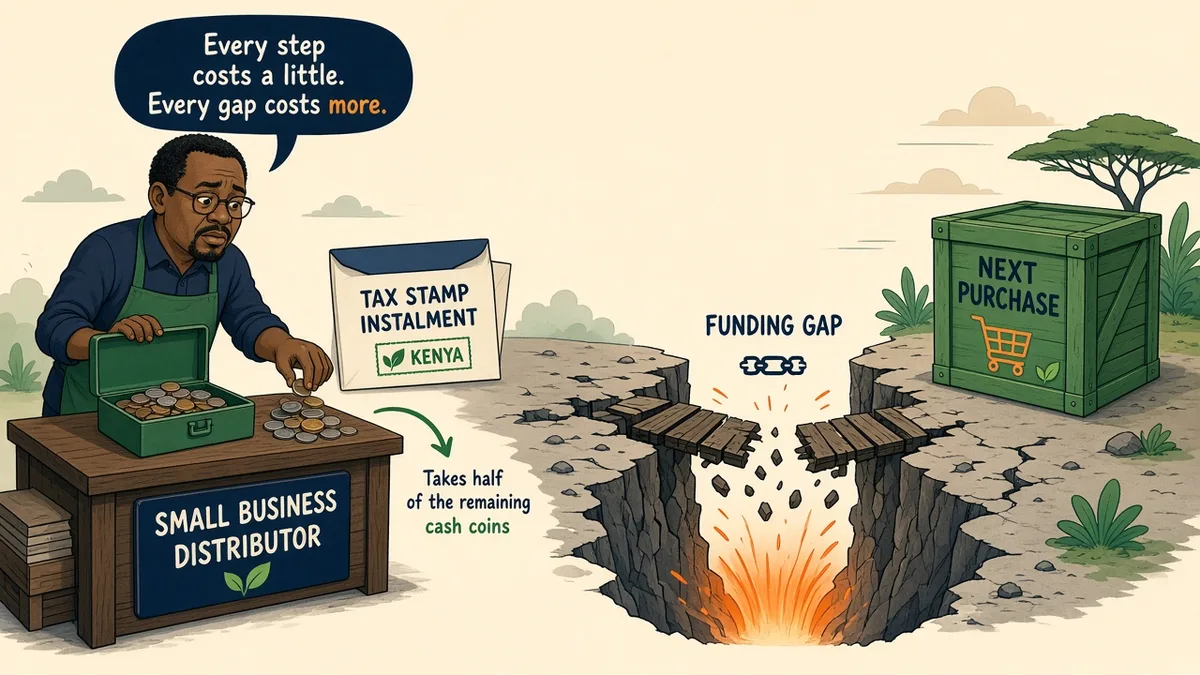
Extend the case with a separate cash-planning scenario. Assume Akinyi’s accountant confirms that a KES 50,000 income-tax instalment falls due before the next customer collections.
- KES 50,000 is an illustrative payment assumption.
- It is not a tax calculation based on the KES 200,000 profit.
- Actual applicability and timing depend on the business’s tax circumstances.
- The instalment paid does not automatically equal the period’s tax expense.
- The earlier statement summaries are not final after-tax accounts.
| Cash-planning item | KES |
|---|---|
| Cash before the assumed tax payment | 100,000 |
| Assumed income-tax instalment paid | (50,000) |
| Cash remaining | 50,000 |
| Next stock purchase, payable before further collections | (180,000) |
| Forecast funding gap | (130,000) |
The KES 180,000 purchase is a future transaction and is excluded from the earlier monthly statements.
Akinyi has earned a profit, but she cannot fund the next KES 180,000 stock purchase from the KES 50,000 remaining. The immediate problem is the timing of cash conversion.
Money visible in an account may already be needed for tax, suppliers, payroll, debt service or delivery commitments. Management earmarking is not the same as legally restricted cash — but both reduce discretionary funds.
Tax timing — mechanism only
How taxation changes available cash
VAT was excluded from Akinyi’s arithmetic for teaching simplicity. That does not imply her business or products are exempt.
VAT timing can create an obligation before a credit customer pays
Under Kenyan VAT rules, the tax point is generally the earliest of delivery or performance, invoice issuance, or receipt of payment in whole or in part. A registered supplier may therefore need to account for output VAT before a credit customer settles.
VAT collected is not automatically freely spendable income
Output VAT is collected for remittance after allowable input tax, subject to the Act. Treating VAT balances as ordinary trading cash confuses an agency-like obligation with discretionary funds.
Input VAT recovery depends on eligibility, evidence and timing
Deduction of input tax depends on acquisition for taxable supplies, qualifying documentation and the evidence trail. An eTIMS invoice does not itself prove payment or automatically establish every deduction or input VAT entitlement.
Withholding tax can reduce cash received
Where a payer must withhold, the payee may receive less than the invoice total. For many resident payments, withholding is not a final tax and may be claimed as a credit when returns are filed; in other cases — including certain resident categories and many non-resident payments — withholding can be final. Confirm the payment type and residency before treating the deduction as temporary or permanent.
Income-tax instalments and balances affect cash planning
Instalment tax is advance income tax paid during the year of income, with any balance due after the accounts establish actual liability. Instalment timing is a cash-planning event even when the period’s tax expense has not yet been finalised.
Turnover-based taxation differs from taxation of accounting profit
Where Turnover Tax applies, tax is charged on gross turnover rather than on accounting profit after expenses. Eligibility, election and exclusions depend on current law and the business’s circumstances — confirm on kra.go.ke before planning around any particular band.
Payroll-related remittances create cash commitments
Employers who deduct PAYE must remit by the due date that applies to that obligation. Those remittances are commitments against cash already held, not free working capital.
Not every tax applies to every SME. Entity type, registration status, tax regime and transaction circumstances matter. Confirm current rates, thresholds and deadlines with authoritative sources before relying on them.
IAS 7 in practice
Why the source of cash matters
IAS 7 requires cash flows to be classified as operating, investing or financing. The classification explains whether cash arrived from trading, from assets, or from owners and lenders.
Operating
Principal revenue-producing activities and other activities that are not investing or financing.
Investing
Acquisition and disposal of long-term assets and other investments not included in cash equivalents.
Financing
Activities that change the size and composition of contributed equity and borrowings.
- Borrowing can increase cash without creating revenue or profit.
- Asset sales can provide cash without demonstrating healthy recurring trading.
- Owner contributions increase funding but do not establish commercial viability.
- Customer advances provide cash while leaving delivery obligations.
- Delaying supplier payments can temporarily preserve cash while increasing operational risk.
- Productive investment can cause negative cash flow.
- Positive cash flow does not, by itself, prove profitability.
- Growth can require funding for inventory, delivery and wages before collections arrive.
The Cash Flow Statement is not immune to classification judgments, timing effects or poor underlying records. Strong decisions still need trustworthy evidence.
From evidence to decision
How ClariFi can connect evidence to decisions
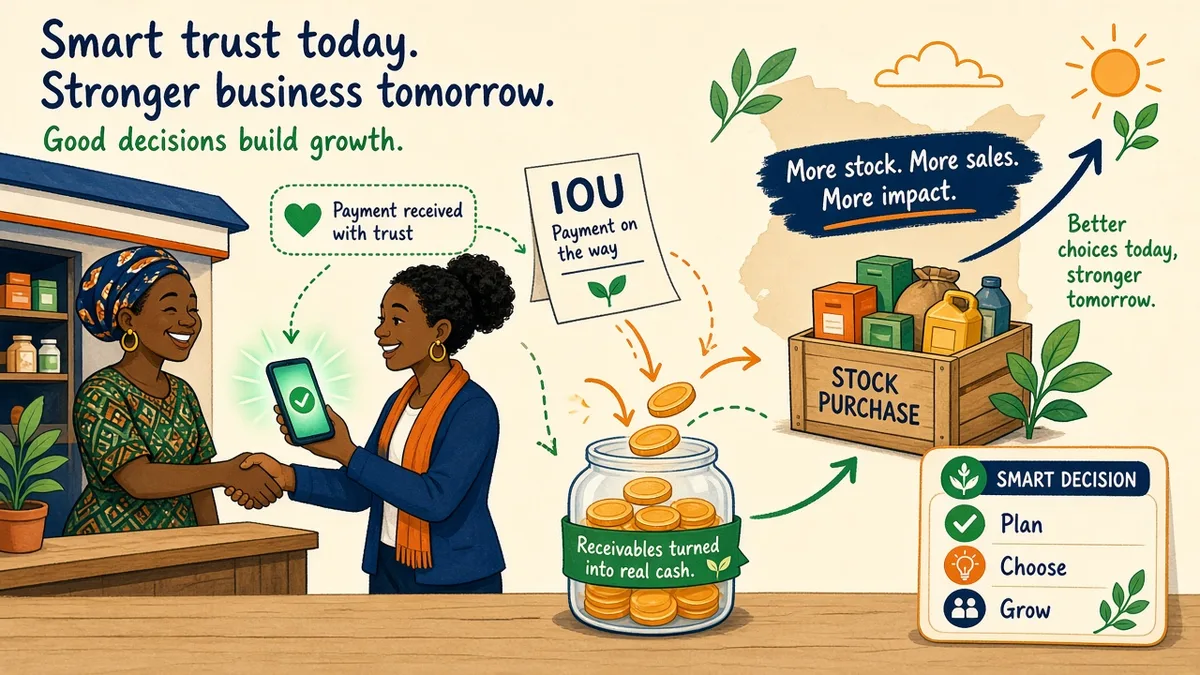
ClariFi is financial intelligence and decision support for Kenyan MSMEs. It helps connect sales, expenses, M-Pesa, POS, stock and bank signals into clearer weekly choices. It does not automatically file tax returns, guarantee compliance, calculate every tax, produce statutory statements or operate production lending integrations.
Frame the business questions:
- Which receivables should be collected first?
- What cash must be reserved for verified tax commitments?
- Which stock purchase can wait?
- Should new contracts require deposits or staged billing?
- Can supplier terms better match customer payment timing?
- Can the business afford an owner distribution?
- Is borrowing bridging a timing gap or sustaining recurring losses?
Transfers between the business’s own bank and mobile-money accounts are not new revenue and must not be counted twice.
Illustrative Decision Card — not a verified customer result or guarantee of a live capability.
| Field | Content |
|---|---|
| Issue | Forecast KES 130,000 shortfall before the next stock purchase. |
| Evidence | KES 600,000 receivables, KES 50,000 cash after the assumed tax payment, and a KES 180,000 purchase due. |
| Priority action | Seek collection of at least KES 150,000 from existing receivables before committing to the purchase. |
| Expected cash effect | If collected in time, cash reaches KES 200,000, leaving KES 20,000 after the purchase. |
| Deadline | Before the supplier payment date. |
| Confidence | Conditional on customer confirmation and actual receipt. |
| Fallback | Negotiate staged supplier payments or reduce the order to match available funds. |
| Follow-through | Review credit terms, deposits and collection practices for subsequent sales. |
Collecting an already recognized receivable increases cash and reduces receivables. It does not create additional revenue or profit.
If Akinyi collects KES 150,000 before the supplier deadline, she can fund the planned purchase and retain KES 20,000. That resolves this immediate gap. She must still check whether the remaining buffer covers other upcoming obligations.
One collection does not permanently fix the business. It buys time to review terms, forecasts and the next commitment.
Looking forward
Why historical cash flow needs a forward-looking forecast
The Cash Flow Statement shows what happened. A cash forecast helps assess what may happen next.
A rolling 13-week forecast is a management practice, not a statutory requirement.
Useful inputs include:
- Reconciled opening cash.
- Realistic customer collection dates.
- Supplier payments.
- Payroll and related remittances.
- Verified tax payments.
- Debt service.
- Planned investment.
- Owner contributions or distributions.
- Minimum cash buffer.
Distinguish confirmed commitments from uncertain assumptions. Forecasts require regular updates and scenario testing.
ClariFi now includes a live 13-week cash grid under Cashflow tools. It is a management worksheet — not a statutory Cash Flow Statement, not tax filing, and not a guarantee of runway.
Weekly rhythm
A practical weekly owner routine
This is a management practice, not a complete statutory compliance checklist.
- Reconcile bank, mobile-money and cash balances.
- Review overdue receivables and realistic collection dates.
- List upcoming supplier, payroll, debt and tax payments.
- Distinguish restricted or committed cash from discretionary funds.
- Update the cash forecast.
- Choose one action and track its result.
Her profit showed that sales exceeded their recognized costs.
Her receivables showed where much of that value was waiting.
Her cash flow showed what the business could presently fund.
Her tax calendar showed what was already committed.
Her next decision determined whether trading could continue.
Know what you earned.
Understand what you own and owe.
Explain what changed for the owners.
Know what is committed to tax.
See whether the cash can carry the next decision.
Sources
References
Tax information verified on 2026-09-19.
- IFRS Foundation, IAS 7 Statement of Cash Flows · accessed 2026-09-19
- Kenya Revenue Authority, Value Added Tax — time of supply (tax point) · accessed 2026-09-19
- Kenya Revenue Authority, Withholding Tax · accessed 2026-09-19
- Kenya Revenue Authority, Turnover Tax (mechanism; confirm current rate and band on kra.go.ke) · accessed 2026-09-19
- Kenya Revenue Authority, Installment Tax · accessed 2026-09-19
- Kenya Revenue Authority, Pay As You Earn (PAYE) · accessed 2026-09-19
- Kenya Revenue Authority, eTIMS overview · accessed 2026-09-19
- Value Added Tax Act, Cap. 476 (Kenya Law) · accessed 2026-09-19
This article is educational. It is not legal, accounting or tax advice. Tax treatment depends on the business’s circumstances and current law. Confirm rates, thresholds, deadlines and applicability with authoritative sources or a qualified professional before acting.
ClariFi provides financial intelligence and decision support. It does not file tax returns, guarantee compliance, calculate every tax liability or produce statutory financial statements.
ONE PRIORITISED NEXT MOVE
See whether cash, collections or tax timing is the pressure that matters this week.
ClariFi helps connect sales, expenses, M-Pesa, stock and bank signals into a clearer weekly decision. It does not file tax returns, guarantee compliance or produce statutory financial statements.
Start with the free Financial Decision Check. If cash timing is the pressure, explore the cash-flow tools next.
Identify one material cash, margin, working-capital or finance-readiness problem.